Următorul curs
Preț 250 € + TVA / pers.
Înscrie-te PCM Process Communication Model Avansat
Curs avansat
Program de training avansat bazat pe Process Communication Model®: coboară acolo unde comunicarea se strică, în subsolul personalității, și antrenează drumul înapoi.
Despre program
Majoritatea programelor de comunicare bazate pe Process Communication Model® se opresc la „etajele de sus” ale personalității: cum percepem lumea, cum ne place să comunicăm, ce nevoi psihologice ne încarcă bateriile. Acest program face pasul următor.
Când nevoile psihologice nu sunt satisfăcute pozitiv, cercetările arată că oamenii vor încerca să și le satisfacă negativ. Devin predictibili în stres: mai întâi apare Driverul (stresul de nivel 1), apoi comportamentele de Subsol (stresul de nivel 2), unde purtăm măștile de Atacator / Acuzator, Salvator sau Neputincios și părăsim poziția existențială „Eu sunt OK, tu ești OK”.
PCM este o teorie de personalitate și comunicare premiată, folosită la NASA în selecția și pregătirea echipelor, la Pixar în dezvoltarea de personaje și în pregătirea comunicațională a oficialilor americani.
Programul are trei module și începe cu o oglindă măsurabilă. Modulele pot fi parcurse împreună (ideal), dar și ca sesiuni de dezvoltare separate.
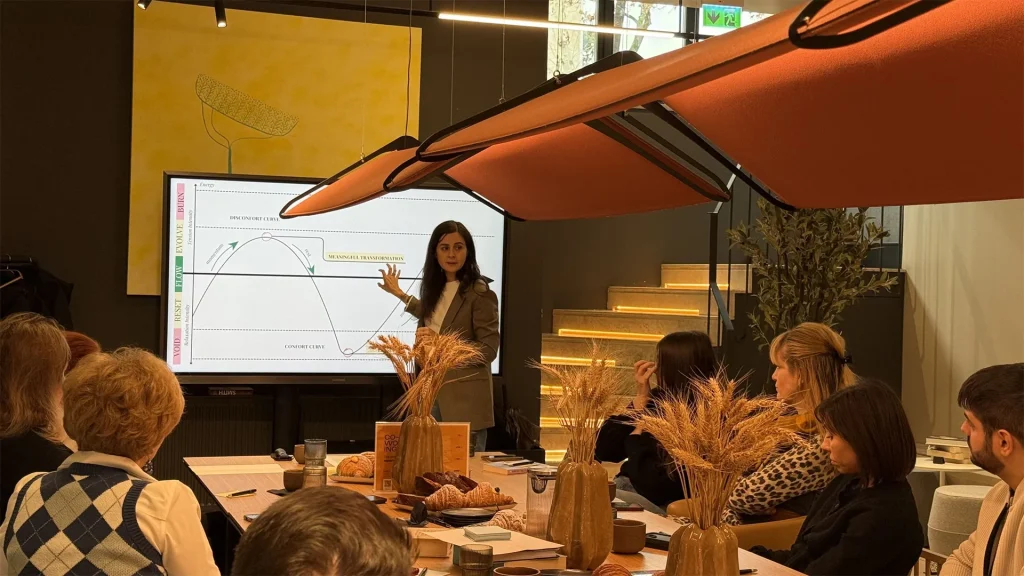
Când nevoile psihologice nu sunt satisfăcute pozitiv, cercetările arată că oamenii vor încerca să și le satisfacă negativ.
Tematică
Mai întâi vezi în oglindă cum influențezi, apoi înțelegi de ce și cum aluneci și înveți drumul înapoi.
Participanții observă cum predispozițiile de personalitate îi fac să comunice mai mult în partea luminoasă (constructivă, +/+) sau în cea întunecată (distructivă, +/-, -/+), așa cum le măsoară psihometricul TSI-G (Udai Pareek), apoi antrenează experiențial cum să rămână în partea luminoasă.
Driverii, stresul de nivel 1: secvențele de stres inevitabile, care au loc de zeci sau sute de ori în fiecare zi. Participanții învață să-și recunoască driverii, pe ai lor și pe ai colegilor, și să navigheze constructiv prin ei.
Stresul de nivel 2: secvențele de distres din PCM, alături de Triunghiul Dramatic al lui Karpman și de pozițiile existențiale OK/OK. Participanții învață să iasă din măștile de Atacator, Acuzator sau Victimă și să rămână în comunicarea constructivă.
Modulul 1
Programul începe cu o oglindă: ce impact are comunicarea mea asupra oamenilor din jur și câte dintre interacțiunile noastre sunt OK, câte non-OK?
Dr. Eric Berne a observat că oamenii folosesc energii diferite când comunică, ca și cum ar schimba frecvența unei stații radio: stările eului, identificabile prin cuvinte, ton, gesturi, postură și mimică.
În PCM, aceste stări devin cele patru Moduri de Comunicare: Director, Computer, Comforter și Emoter. Folosite pe canalul potrivit, sunt cheia care deschide ușa fiecărui tip de personalitate; folosite greșit, sunt chiar butonul care trimite oamenii în subsol, coborâre pe care o explorăm în Modulele 2 și 3.
Modulul pornește de la Transactional Style Inventory – General (TSI-G), un instrument de 48 de itemi dezvoltat de prof. Udai Pareek, pe care participanții îl completează cu 3–5 zile înainte de curs. TSI-G măsoară 12 stiluri de comunicare, din combinarea celor patru stări ale eului cu cele două poziții existențiale (OK / non-OK):
Scorarea produce profilul individual pe cele 12 stiluri, ponderea EDCC și Operating Effectiveness Quotient (OEQ), raportul dintre stilurile OK și non-OK. În limbajul programului, OEQ înseamnă „cât timp petrec în condominium și cât în subsol atunci când comunic”. Pentru că îl măsurăm din prima zi, devine metrica de referință a întregului program: TSI-G se poate readministra la 3 luni după training, iar creșterea OEQ este dovada măsurabilă a impactului.
Mesajul central al modulului: fiecare Mod de Comunicare are o versiune OK (luminoasă, constructivă) și o umbră non-OK (întunecată, distructivă). Nu există mod „bun” sau „rău”: există un mod potrivit sau nepotrivit pentru persoana din fața ta și o versiune OK sau non-OK a aceleiași energii.
TSI-G este un instrument de auto-raportare cu scop de dezvoltare, nu de selecție: rezultatele aparțin participantului și se discută în debrief facilitat, nu se transmit angajatorului la nivel individual.
Inventarul se administrează cu 3–5 zile înainte de Modulul 1. Scorarea se poate face individual (foaia de scorare Pareek) sau centralizat, de facilitatori, cu un raport agregat și anonimizat la nivel de grup, util și pentru HR, ca diagnostic al climatului de influențare din echipă.
Modulul 2
Driverul este manifestarea condiționării „Eu și tu am fi OK dacă…”: o încercare, încă funcțională, de a rămâne OK. Cine învață să-și prindă Driverul din zbor nu mai ajunge în subsol.
Modulul 3
Al treilea modul coboară în stresul de nivel 2, acolo unde „unul dintre noi nu mai e OK”.
Aici PCM se întâlnește cu Analiza Tranzacțională: comportamentele de subsol sunt măști, iar măștile sunt roluri în Triunghiul Dramatic. Modulul 3 face vizibile aceste jocuri și antrenează ieșirea din ele.
Obiective
Un vocabular comun de echipă pentru a vorbi despre stres fără blamare: „am intrat în subsol”, în loc de „ești imposibil”.
Pentru echipe
Pentru solicitări de colaborare cu echipa Mind Architect, te rugăm să ne lași un mesaj în formularul de contact, iar unul dintre colegii noștri va reveni în cel mai scurt timp posibil.
Dacă preferați, ne putem auzi și la telefon, la 0724238492.
Impact
Paul is an accomplished speaker and an excelent trainer. He is dynamic, bright and a go getter. He has become a shareholder and the Sales Manager for my company managing the Process Communication Model in Romania.
 John Parr (MSc)
Certifying Coaches & Trainers with Emotional Assertiveness
Paul Olteanu is one of OTP Bank Romania partners in learning activity, who trained our Directors and Managers in Neuroscience of Communication, one of the most revealing topics on how the communication in the workplace can be improved. I share with Paul this high interest in neurosciences and the belief that a better understanding of how the brain works leads to a better self management in communicating and collaborating with the others. What differentiates Paul as a trainer is his outstanding ability to blend hard facts and pieces of scientific information into an enthusiastic, optimistic and joyful manner of delivering the course.
At a personal level, I had the privilege to be accompanied by him as a coach in public speaking. in preparing my speech for a conference. The way he challenged me during this partnership, the warm support he offered, the knowledge I got in conversations and the connection he is able to develop with his clients, led me to feel better prepared than ever.
Only a direct experience with him as a trainer or coach can give you the true dimension of how Paul enables transformation in people and organizations. I highly recommend to offer yourself the chance to work with him for getting a solid and gentle improvement process, thus guiding you to better results and greater satisfaction, regardless the purpose you might be pursuing.
 Diana Mișa
Team Performance & Effectiveness | Collective Wisdom | Personal Mastery
I have worked with Paul for various client groups: top&mid-management, as well as specialists, and the feedback has always been outstanding. Paul has a wealth of knowledge, a profound way of diving into the audience's needs and interests and a coaching attitude. He understands, integrates and builds on the wider implications in culture and business strategy, and works with the client to fulfill the objectives. The impact that he has on the audience is long lasting, as he manages to trigger an a-ha moment which leads to behavior change. Looking forward to experiencing more great work from Paul in the future!
 Catalina Profiriu
Head of Human Relations - Romania @ Viatris
Paul is an enthusiastic professional with great passion for people and for assisting them with his expertise. I interacted with Paul during the PCM training and I was extremely pleased with the way he delivered the session and the way he managed to bring value to all the participants and keep us connected. I find the model and Paul’s approach very applicable to the business context by enriching relationships within any organization. Also, Paul is experienced on Personal Branding and our interaction as well as with other senior leaders from our organization on this topic has been insightful and useful for us. I highly appreciate the quality of his coaching and customized advice.
 Alina Timar
People & Organization Director @ Mars
Saying that Paul is one of the best trainers I know, would be an understatement. Paul is a full-fledged professional, with enough knowledge about the human mind and its workings in order to mold it into what becomes transformational training. I've had the opportunity to work with Paul both during a PCM training for my team and within a transformational coaching learning context. I have been profoundly impressed by Paul's eagerness to find himself, by his humanity and his interest in people. The PCM introduction he did for myself and my team has left a mark on the way we see ourselves as individuals and also as a team and I believe this should become a norm in all companies that have as main aim people motivation and development. I am happy to know Paul and I am an advocate of both himself and his delivery PCM model inside and outside companies.
 Cristiana Lupu
Vice President I Digital Renewals Center @ Oracle I ICF Coach, ACC
I had the opportunity to attend Paul's training courses on the subjects of PCM and the neuroscience of communication. I must admit that these were the most interesting, interactive and enjoyable training sessions I've ever attended, and the reasons why are quite simple: Paul's work is a reflection of his passion for the subjects as well as for his genuine desire to help other people understand themselves and grow.
It was pure delight to have Paul as a trainer, since he is very intelligent and well-educated, an excellent communicator and an engaging educator. I strongly recommend Paul to any individual who wants to understand how communication and behavior are interconnected and how you can change your mind-set and create better relationships with friends, family and colleagues, and to any organization who wants to have a healthy and thriving culture.
 Vlad Catanescu
Experienced corporate finance & risk management professional @ Banking and financial services